
- 2026.11.08 Job site daily report app: capture work before the drive home
- 2026.11.08 Multi-location inventory spreadsheet: stop missing transfers
- 2026.11.06 Reconcile marketplace payouts with your orders in Google Sheets
- 2026.11.01 What to automate first in a small business office: pick one task
- 2026.10.31 Hiring someone to automate a spreadsheet: 5 questions before you sign
- 2026.10.29 Same order submitted twice at once? Stop duplicate rows in Sheets
- 2026.10.24 Slow Google Sheets script on order intake? Read once, write once
- 2026.10.20 Google Sheets CSV export drops leading zeros: keep IDs intact
- 2026.10.20 Importing orders into Google Sheets without duplicate rows
- 2026.10.16 Google Sheets automation sent the email twice? 6 trigger traps
- 2026.10.16 Stop dragging formulas down in Google Sheets (ARRAYFORMULA)
- 2026.10.15 Filter, total and sort a Google Sheet with one formula (QUERY)
- 2026.10.15 Shift swaps from a phone: one approval, and the roster updates
- 2026.10.14 Google Sheets lookup shows the wrong value: VLOOKUP vs XLOOKUP
- 2026.10.14 Expense app that logs a coffee in two taps and totals in Sheets
- 2026.10.14 Daily check-in app with CSV export you can total in Google Sheets
- 2026.10.13 Stale data on your dashboard: when 'updated' doesn't mean fresh
- 2026.07.28 Tracking staff attendance in Google Calendar: where records break
- 2026.07.26 Google Sheet shared by link: how company data quietly leaks
- 2026.07.23 Form auto-reply emails that annoy customers, and how to fix them
- 2026.07.13 ChatGPT API bill higher than expected? Where the cost leaks You are here
- 2026.06.20 Monthly SaaS bill for a simple workflow: rent it or own a tool?
- 2026.06.19 Adding AI to a work app: what it costs each month, and who pays
- 2026.06.19 Automate repetitive office work in Google Sheets with Apps Script
- 2026.06.16 Field inspection app for a small team: paper checklist to phone
- 2026.06.10 Inventory tracking in Google Sheets for one store: where it stops
- 2026.06.08 Is Google Sheets automation free? No server bill, but plan upkeep
- 2026.06.06 Outsource, DIY or SaaS for one workflow: which costs less?
ChatGPT API bill higher than expected? Where the cost leaks
When a ChatGPT API bill grows faster than expected, retries, logs and model choice are often why. Track tokens, cache repeated work, route models and set budget guards.
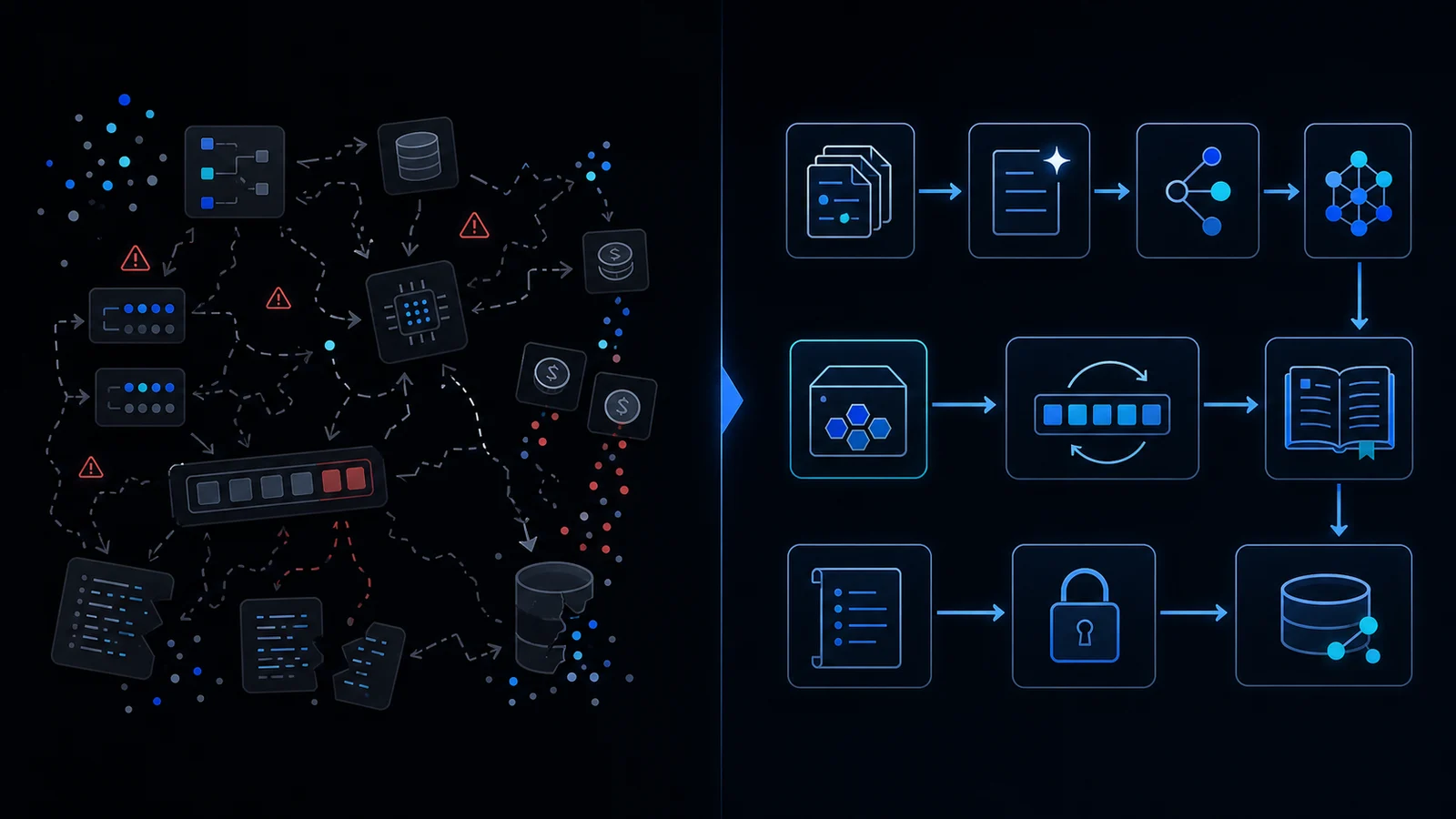
Retries multiply calls; cache hits and caps bound repeat work
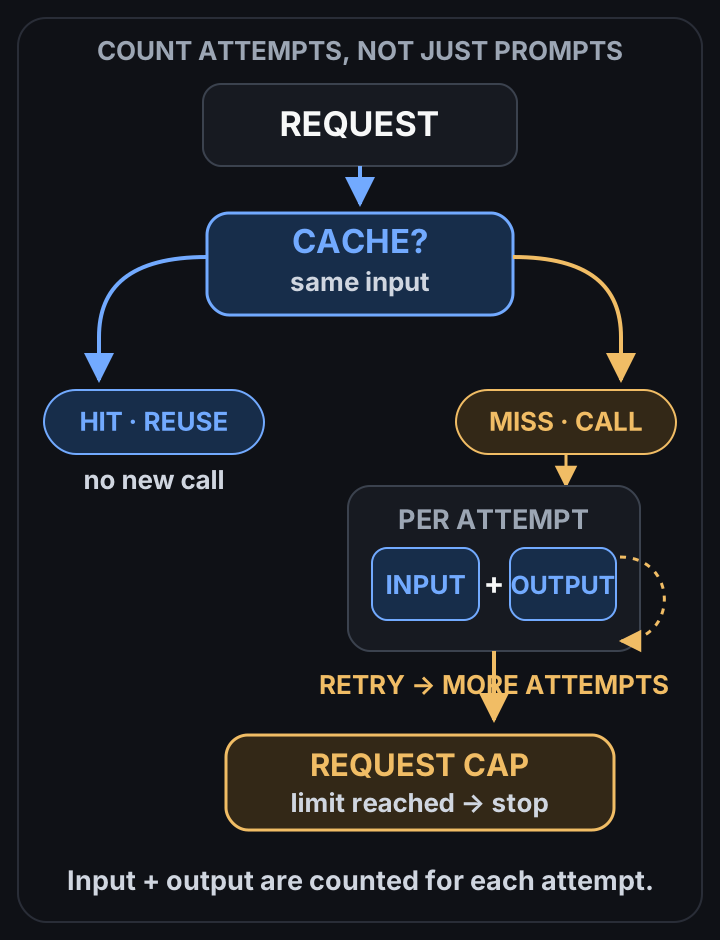 View full-size diagram
The AI feature in the request form looked cheap in testing. Then the first full month’s API bill came in well above the estimate, and nobody could say which calls caused it.
The answer: tokens, retries and logs multiply quietly. Without per-call accounting, model routing, caching and a budget guard, ChatGPT API spend outruns any forecast. For AI features built with those guards from the start, see AI features for work tools.
Token Cost Fundamentals
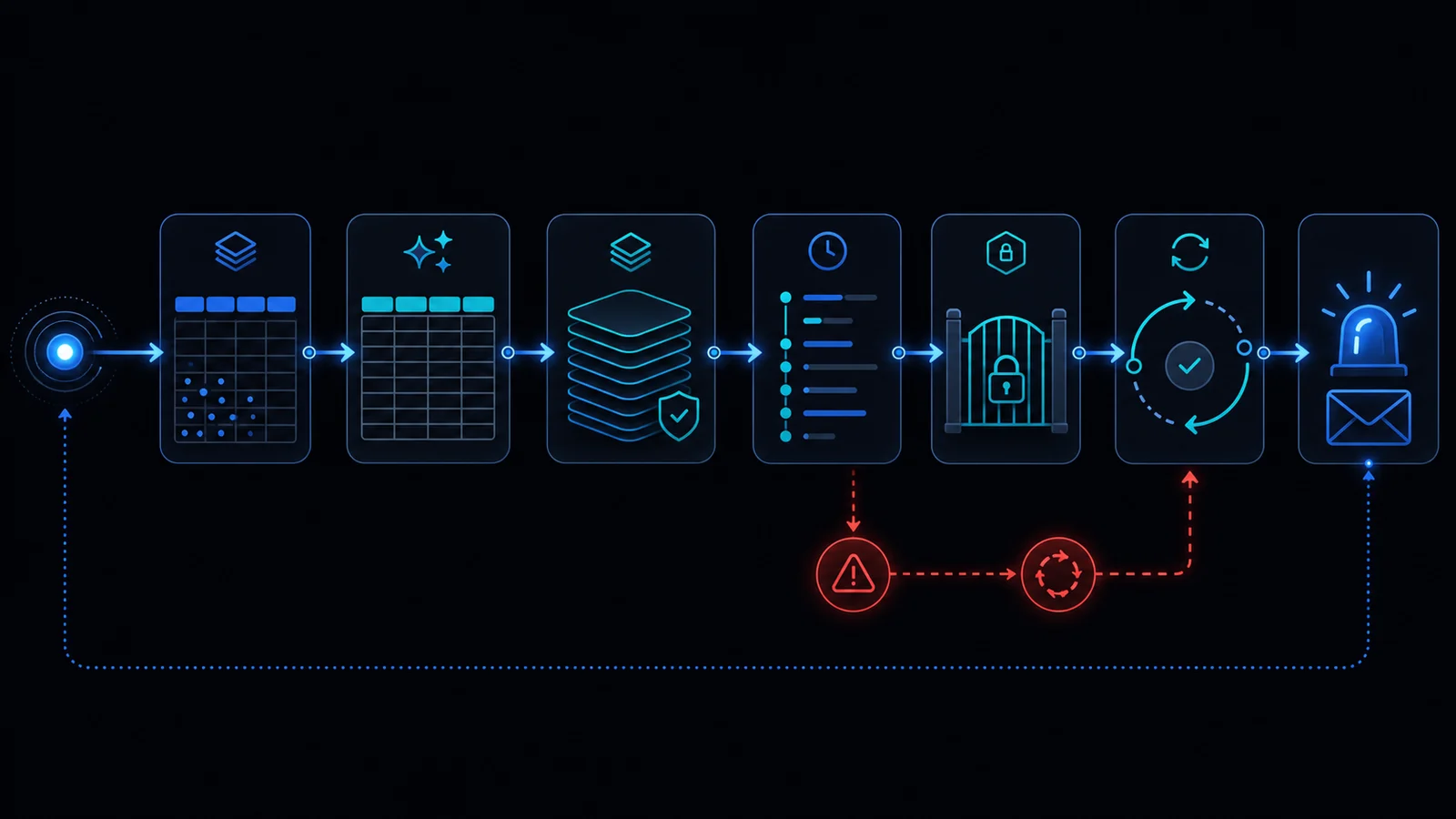 Input and output tokens are billed separately. GPT-4o costs $2.50 per million input tokens and $10.00 per million output tokens. Repeating a long system prompt on every call scales cost linearly.
Model Selection Impact
| Model | Input $/M | Output $/M | Use case |
|---|---|---|---|
| GPT-4o | 2.50 | 10.00 | Complex reasoning |
| GPT-4o-mini | 0.15 | 0.60 | Simple classification |
Source: OpenAI’s GPT-4o model page and GPT-4o mini announcement, checked 2026-11-07. OpenAI now marks GPT-4o as deprecated, so check the current pricing page before you budget a new project.
Retry and Backoff Policy
Without exponential backoff on 429/5xx errors the same prompt is sent dozens of times. Adopt the pattern from the retry-backoff note.
Caching Implementation
function getCacheKey(prompt, model, temp, userId) {
  const hash = Utilities.computeDigest(Utilities.DigestAlgorithm.SHA_256, prompt + model + temp);
  return `${userId}:${model}:${hash}`;
}

function budgetGuard(currentTokens, limit) {
  if (currentTokens > limit) throw new Error('Budget exceeded');
}
Logging Overhead
Writing every response to Sheets adds both storage and read costs. See spreadsheet-inventory-limits and store only required fields.
Including user ID in the cache key enables personalized reuse while preserving privacy boundaries.
Model Routing Strategy
Route simple queries to mini and complex ones to 4o. Cross-reference apps-script-automation-guide and ai-cost-and-keys.
Failure Modes and When Not to Use
- Disable caching when hit rate stays below 20%.
- Never cache when live data is required.
- Check six-minute-limit if LockService contention appears.
Operational Checklist
- Daily token-usage script
- Per-model budget thresholds
- 24 h TTL cache
- Defined fallback model
Final review criteria
The useful question is not how many features the automation has. It is whether the workflow can be understood, recovered, and safely rerun after something goes wrong.
- Raw input is separated from the human-facing working view.
- Each run records success, failure, processed count, and error message.
- Replaying the same input does not create duplicate results.
- Permission changes, quota errors, and external API failures are visible later.
For low-risk internal tasks, that may be enough. For customer replies, booking confirmation, inventory updates, payments, or legal records, the threshold is higher: compare Apps Script against a dedicated SaaS or a small server-backed system before relying on it.
Frequently asked questions
- 2026.11.08 Job site daily report app: capture work before the drive home
- 2026.11.08 Multi-location inventory spreadsheet: stop missing transfers
- 2026.11.06 Reconcile marketplace payouts with your orders in Google Sheets
- 2026.11.01 What to automate first in a small business office: pick one task
- 2026.10.31 Hiring someone to automate a spreadsheet: 5 questions before you sign
- 2026.10.29 Same order submitted twice at once? Stop duplicate rows in Sheets
- 2026.10.24 Slow Google Sheets script on order intake? Read once, write once
- 2026.10.20 Google Sheets CSV export drops leading zeros: keep IDs intact
- 2026.10.20 Importing orders into Google Sheets without duplicate rows
- 2026.10.16 Google Sheets automation sent the email twice? 6 trigger traps
- 2026.10.16 Stop dragging formulas down in Google Sheets (ARRAYFORMULA)
- 2026.10.15 Filter, total and sort a Google Sheet with one formula (QUERY)
- 2026.10.15 Shift swaps from a phone: one approval, and the roster updates
- 2026.10.14 Google Sheets lookup shows the wrong value: VLOOKUP vs XLOOKUP
- 2026.10.14 Expense app that logs a coffee in two taps and totals in Sheets
- 2026.10.14 Daily check-in app with CSV export you can total in Google Sheets
- 2026.10.13 Stale data on your dashboard: when 'updated' doesn't mean fresh
- 2026.07.28 Tracking staff attendance in Google Calendar: where records break
- 2026.07.26 Google Sheet shared by link: how company data quietly leaks
- 2026.07.23 Form auto-reply emails that annoy customers, and how to fix them
- 2026.07.13 ChatGPT API bill higher than expected? Where the cost leaks You are here
- 2026.06.20 Monthly SaaS bill for a simple workflow: rent it or own a tool?
- 2026.06.19 Adding AI to a work app: what it costs each month, and who pays
- 2026.06.19 Automate repetitive office work in Google Sheets with Apps Script
- 2026.06.16 Field inspection app for a small team: paper checklist to phone
- 2026.06.10 Inventory tracking in Google Sheets for one store: where it stops
- 2026.06.08 Is Google Sheets automation free? No server bill, but plan upkeep
- 2026.06.06 Outsource, DIY or SaaS for one workflow: which costs less?